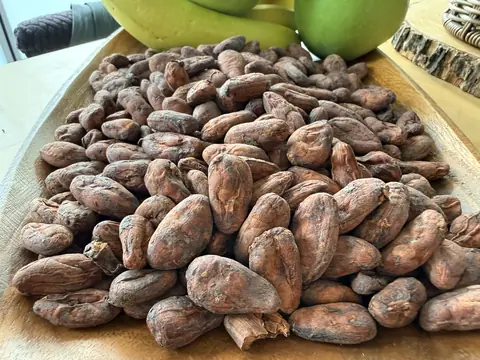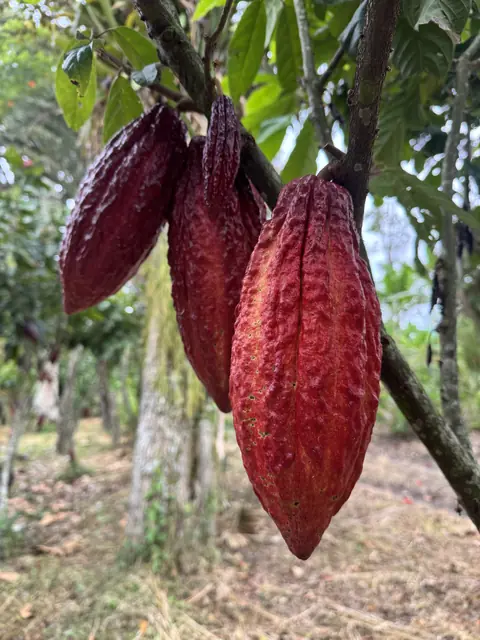
Fine-flavor vs bulk cacao: what's the difference?
Fine-flavor cacao is a small slice of the world trade, prized for aromas such as fruit, flowers and nuts. Bulk cacao is the commodity that carries basic chocolate flavour. Genetics start the difference; fermentation and drying decide whether it survives.

- The ICCO defines fine or flavour cocoa by its distinctive aroma and flavour; it is a small share of world trade, commonly put at around 5%.
- Genetics set the potential: Criollo and Trinitario lines are associated with fine flavour, Forastero types such as Amelonado with bulk.
- Fermentation and drying are where that potential is kept or lost, so a fine-flavour tree can still produce a bulk-quality lot.
- A maker can check for themselves with a cut test and a liquor tasting before committing to a box.
If you make chocolate from the bean, you have probably heard "fine flavor" used as a compliment, a category and a sales line, sometimes in the same sentence. It does have a real meaning. It comes from the cocoa trade itself, and it tells you something useful about what a lot of beans can do in your roaster.
This guide walks through what separates fine-flavor cacao from bulk cacao, why the line is less about the tree than people think, and how to check a sample yourself.
The ICCO definition
The International Cocoa Organization (ICCO) divides the world's cocoa into two broad markets. Bulk or ordinary cocoa is the large commodity stream that goes into most mass-market chocolate, cocoa powder and butter. Fine or flavour cocoa is a much smaller stream valued for distinctive aroma and flavour characteristics.
How small? The figure most often quoted is around 5% of world cocoa trade. Treat that as approximate: the ICCO reviews its list of fine-flavour producing countries and the share credited to each, so estimates move over time.
The ICCO's classification works at the level of countries. Its list, published as an annex to the International Cocoa Agreement and reviewed by an expert panel, records which producing countries export fine or flavour cocoa and what proportion of their exports qualifies. In Spanish the same category is called cacao fino de aroma, which is the phrase you will hear on Colombian farms.
A country-level label is a starting point, not a guarantee. For a maker, the useful question is narrower: does this lot behave like fine-flavour cacao?
Genetics: where the potential starts
Cacao was traditionally sorted into three groups. Criollo, the type European buyers valued most in colonial times, is known for mild bitterness and delicate aroma but is fragile and disease-prone. Forastero covers hardier, higher-yielding types; the West African Amelonado is the classic example and the backbone of the bulk trade. Trinitario began as a cross between the two and often carries fine-flavour character with better vigour.
Geneticists have since moved beyond those three names. Motamayor and colleagues (2008) described ten genetic clusters, and Colombian researchers later identified an eleventh, called Caquetá, inside Colombia. For a maker the old labels remain shorthand, but they are blunter than they sound. Most cacao on farms today is a hybrid population, and a variety name on its own tells you less than a cut test does. Our guide to Colombian cacao varieties and clones goes into the named clones in detail.
The clearest bulk example from the Americas is CCN-51, a clone bred in Ecuador and planted widely for its yield and its large number of beans per pod. A review of Colombian clones notes that its liquor is dominated by bitter and astringent notes with few specific flavours, and that the Colombian industry has worked to reduce its share in favour of national fine-flavour clones (Rodriguez-Medina et al., 2019).
Fermentation and drying: the real differentiator
Here is the part that surprises people. Colombian research describes fermentation as the single most critical step in developing cacao quality, and the principal thing that separates fine-flavour from commodity beans. The best genetics in the world will not save a lot that was under-fermented, rushed through drying or stored damp.
During fermentation, yeasts and then acetic acid bacteria work on the sweet pulp around the beans. The heat and acid kill the seed and set off reactions inside it: proteins break down into the flavour precursors that roasting turns into chocolate notes, and polyphenols oxidise, which softens bitterness and astringency. Turning the mass on time, and stopping at the right moment, is skilled and attentive work.
Drying is just as unforgiving. Beans need to come down to around 7% moisture for safe storage, and they need to do it gradually. Dried too fast, the shell hardens and traps acids inside, which shows up as harsh acidity in the bar. Dried too slowly or in wet weather, mould becomes a risk. Our article on cacao from harvest to chocolate follows each step on the farm.
Where beans are sold mainly by weight and basic grade, there is little reward for the extra days and labour that careful fermentation and drying take. Fine-flavour cacao is fermented and dried to bring out flavour, because flavour is what its buyers pay for.
How they taste
Cacao sensory panels, including the one at AGROSAVIA's La Suiza research centre in Santander, separate basic flavours from specific ones. Basic flavours are bitter, astringent and acid. They belong in chocolate, but when they dominate, quality is judged lower. Specific flavours are cacao, fruity, floral, nutty and sweet notes, and they are what point a liquor towards the fine-flavour category.
Bulk liquor tends to taste of strong, plain cocoa with noticeable bitterness and drying astringency, and little else. Fine-flavour liquor still tastes of cacao, but on top of it you find something specific: citrus, yellow fruit, dried fruit, flowers, nuts, caramel. Panels also mark defects such as raw or green notes, smoke, mould and over-fermentation, which can appear in either category.
Fine-flavor vs bulk cacao at a glance
| Attribute | Fine-flavor cacao | Bulk cacao |
|---|---|---|
| Share of world trade | Small, commonly put at around 5% (ICCO) | The large majority |
| Typical genetics | Criollo, Trinitario and fine-flavour national clones | Forastero types such as Amelonado; high-yield clones such as CCN-51 |
| Fermentation | Controlled, turned on schedule, stopped by smell and temperature | Variable; rewarded mainly by weight and basic grade |
| Drying | Slow and even, to about 7% moisture | Variable; speed and volume often come first |
| Flavour | Specific notes (fruit, floral, nutty, sweet) over moderate bitterness | Basic cocoa, bitter and astringent, few specific notes |
| How it is sold | By lot, with origin, cut test and tasting notes | By weight and grade, priced off the futures market |
| Typical buyer | Bean-to-bar makers and premium chocolate houses | Industrial grinders and mass-market manufacturers |
How a maker can tell
Start with the cut test
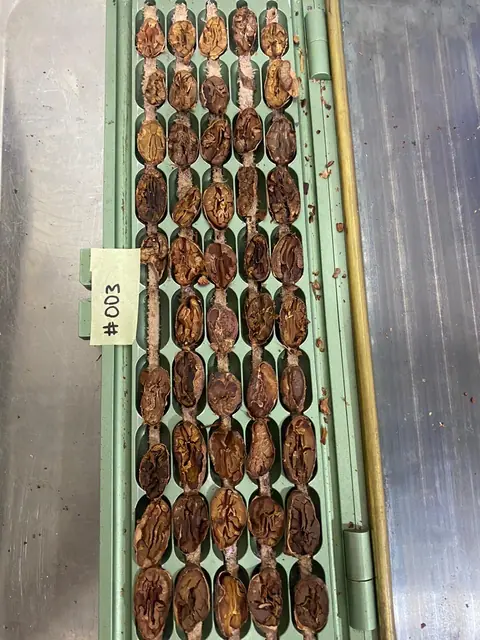
Cut a sample of beans lengthwise and count them. Well-fermented beans are brown and open in structure; under-fermented beans are purple or violet; slaty beans are grey and compact, a sign they were barely fermented at all. Count mould, insect damage and germinated beans too. Standards such as ISO 2451 and Colombia's NTC 1252 set limits for each defect and assign grades. The full method is in the cacao cut test, explained.
A good cut test tells you the beans were handled well. It cannot tell you the flavour.
Then taste the liquor
Roast a small batch, grind it to liquor without sugar, and taste it next to a lot you already know. Look for specific flavours, the balance between acidity and bitterness, and the length of the finish. Check for defects: smoke, mould or a raw, green edge. If you can, compare your notes with an independent sensory report on the same lot.
Between them, these two checks tell you more than any label.
Where Colombia fits
Colombia is on the ICCO's list of fine or flavour cocoa producers, which credits around 95% of the country's cocoa exports as fine or flavour. That is a strong position, but it is a classification of national exports, not of every bag. Colombian growers work across very different landscapes, from Santander to the Llanos foothills, and quality varies from farm to farm; our overview of Colombian cacao regions maps them.
At SelvaCoa we treat each lot on its own evidence. Our Macondo lot from Quindío, a blend of the Fedecacao clones FSV 41 and FEAR 5, cut at 94% fully fermented with no mould or slaty beans and graded Grade 1 under ISO 2451:2017. An independent panel scored it 88 out of 100 with no defects, noting dried peach, macadamia, hazelnut and caramel, with astringency absent. Those are the numbers we would want to see as makers, so they are the numbers we publish.
Frequently asked questions
Is fine flavor cacao the same as cacao fino de aroma?
Yes. Cacao fino de aroma is the Spanish term used in Colombia and across Latin America for what the ICCO calls fine or flavour cocoa. The French equivalent is cacao fin ou de flaveur. All three describe beans with distinctive aromatic and flavour characteristics, as opposed to bulk or ordinary cocoa.
Is all Criollo or Trinitario cacao fine flavor?
No. Genetics set the ceiling on flavour, but poor fermentation or drying can turn beans from a fine-flavour tree into a flat, astringent or smoky lot. Fine flavour has to be confirmed in the cut test and the tasting, not assumed from the variety name.
Is CCN-51 bulk cacao?
CCN-51 is a high-yield clone bred in Ecuador and is generally traded and treated as bulk-quality cocoa. Colombian research describes its liquor as dominated by bitter and astringent notes with few specific flavours. Some makers work with it carefully, but it is not what buyers mean by fine flavour.
Does Colombia only export fine flavor cacao?
Not entirely. Colombia is on the ICCO list of fine or flavour cocoa producers, which credits around 95% of its cocoa exports as fine or flavour. That is a country-level classification, so each lot still needs its own cut test and tasting.
How can I tell if a cacao sample is fine flavor?
Ask for the cut test and lab report, run your own cut test on a sample of beans, then roast a small batch and taste the liquor. Fine-flavour cacao shows specific notes such as fruit, flowers or nuts over a moderate base of bitterness and astringency, with no mould, smoke or raw defects.
- International Cocoa Organization (ICCO). Fine or flavour cocoa: Ad hoc Panel on Fine or Flavour Cocoa and the list of fine or flavour producing countries, International Cocoa Agreement, 2010, Annex C.
- Rodriguez-Medina, C. et al. (2019). Cacao breeding in Colombia, past, present and future. Breeding Science, 69(3), 373–382. doi:10.1270/jsbbs.19011
- Motamayor, J.C. et al. (2008). Geographic and genetic population differentiation of the Amazonian chocolate tree. PLOS ONE, 3(10).
- Báez Daza, E.Y. et al. (2022). Caracterización agronómica, fisicoquímica, sensorial y de metabolitos con actividad funcional de cacaos especiales cultivados bajo sistemas agroforestales en el departamento de Santander. AGROSAVIA. doi:10.21930/agrosavia.investigation.7405309
- Jaimes Suárez, Y.Y. et al. (2022). Modelo productivo para el cultivo de cacao (Theobroma cacao L.) en el departamento de Santander (2nd ed.). AGROSAVIA. doi:10.21930/agrosavia.model.7405538
- ISO 2451:2017. Cocoa beans: Specification and quality requirements. International Organization for Standardization.
- NTC 1252 (2021). Cacao en grano: Especificaciones y requisitos de calidad. ICONTEC.
- Macondo lot data: physical examination report No. 0250 (29 December 2025) and sensory evaluation by Chocolates del Eje / Cacao Trueques (25 January 2026).