How to choose a cacao bean supplier: a checklist for bean-to-bar makers
Where to buy cacao beans for chocolate making comes down to ten questions: can you taste first, is there lab data for the lot, can you buy it again, and what does it really cost delivered. Here is the checklist, with the red flags to watch for.

- Taste before you commit. A useful sample is big enough to roast, winnow and refine a batch on your own equipment.
- Ask for lab data on the exact lot you will buy: cut test, moisture, and contaminants such as cadmium and aflatoxins.
- Compare landed cost per kilo, not list price. Freight and import paperwork can change which offer is cheaper.
- If you import beans yourself, FDA's FSVP rule makes you responsible for verifying the foreign supplier.
For a bean-to-bar maker, the supplier is part of the recipe. The same roast and the same melanger will give you a different bar from a different lot, and a lot you cannot buy again is a bar you cannot make again.
Price per kilo is the easiest number to compare and the least informative on its own. The checklist below covers the ten questions we think matter most when choosing a cacao bean supplier, in roughly the order you will meet them.
It is written by a supplier, so read it with that in mind. We built it around what any maker should insist on, from a one-person workshop to a factory, and at the end we answer it ourselves.
The checklist
1. Can you taste before you buy?
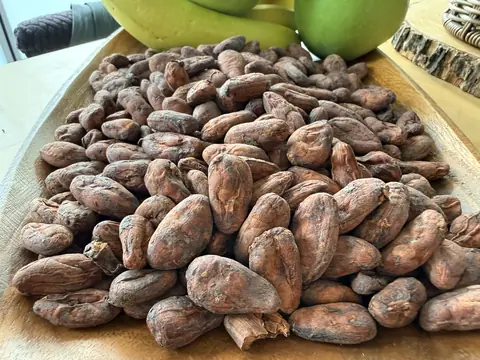
A handful of beans tells you very little. To judge a bean you need to roast it, winnow it and run it through your own melanger, and that takes a real quantity: enough for at least one full batch on your equipment.
Ask how big the sample is, what it costs, who pays shipping, and whether it comes from the same lot you would be buying. A sample from a different harvest is a sample of a different bean.
2. Is there lab data for this lot?
Ask for a report on the specific lot, with a lot number and a date, not a typical analysis for the origin. Three kinds of data matter.
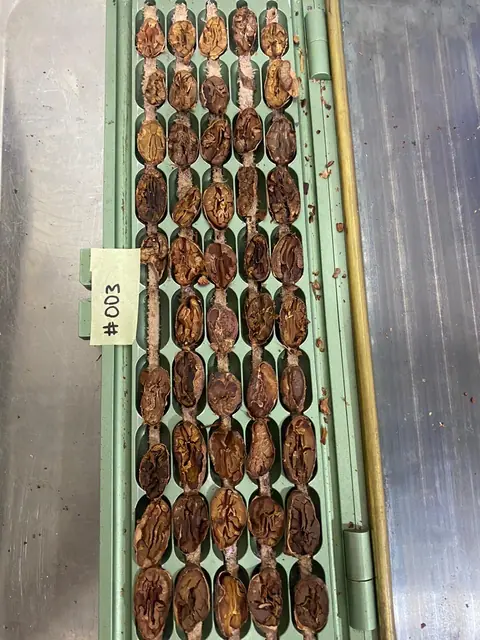
Cut test and moisture. The cut test shows how well the beans were fermented and whether there is mould, slate or insect damage. Moisture tells you whether they will keep. ISO 2451 and Colombia's NTC 1252 both grade beans on these results. If the report is new to you, start with the cut test, explained.
Heavy metals. Cadmium is taken up from the soil by the cacao tree and ends up in the bean, so levels depend on where it was grown. It passes into your chocolate, and some markets regulate it: the EU sets maximum levels for cadmium in cocoa and chocolate products, and California's Proposition 65 lists both cadmium and lead. Knowing the bean's number lets you estimate what your bar will contain at your cacao percentage.
Mycotoxins, residues and microbiology. Aflatoxins and ochratoxin A are produced by moulds, typically when beans are dried poorly or stored damp, and roasting cannot be relied on to remove them. A pesticide residue screen should say what was tested and at what detection limit; a report that lists how many compounds were screened is more useful than one that only says "pass". A basic microbiology panel, including Salmonella, is a sensible extra.
3. Defined lots and continuity
A defined lot is a quantity of beans from one harvest and one post-harvest process, tested as a unit. It is the only way to know the second box will taste like the first.
Ask what lot you are buying, how much of it is left, and what happens when it runs out. If you plan to build a named bar around an origin, you want enough of the lot to cover your production, or an honest answer about what comes next.
4. Transparent pricing, including freight
The number that matters is landed cost per kilo: everything you pay to get the beans to your door, divided by the kilos that arrive.
Landed cost per kg = (bean price × kg + freight + any import and handling costs) ÷ kg received
A low list price with freight added later can end up costing more than a higher price quoted with freight included. Ask for freight to your address with the quote, and ask whether freight is charged at cost or carries a margin.
5. Do the order sizes fit your scale?
A small workshop may make one sack last months; an industrial operation needs pallets or containers on a schedule. Ask for the smallest order, whether there is a trial size between a sample and a full box, how price steps with volume, and whether the same supplier can grow with you to container loads.
A minimum that forces you to buy more than you can use or store well is not a bargain, however good the per-kilo price looks. Our guide to buying cacao beans wholesale walks through each step, from a sample to a container.
6. Who carries the import burden?
Bringing cacao into the US yourself means more than paying for freight. Each shipment of imported food needs prior notice to FDA before it arrives and a customs entry, usually filed by a licensed customs broker. You may also need a freight forwarder to move the goods from port to door.
Under FDA's Foreign Supplier Verification Programs rule (FSVP, 21 CFR Part 1, Subpart L), the FSVP importer must verify that the foreign supplier's food meets US safety requirements, and keep records to show it. If you are the importer, that responsibility is yours.
Buying beans that are already imported and sitting in a US warehouse moves that work off your desk: you receive a box, like any other ingredient. Ask the supplier where the beans are now, who handled FSVP, and whether anything needs filing on your side.
7. Can you trace it to a named farm?
"Colombian" is a country, not a source. Good traceability means a named farm or cooperative, a place you could find on a map, the varieties planted, and a harvest date.
It lets you tell your customers a true story, and it lets you ask specific questions when a lot tastes different from the last one.
8. Will someone who knows the beans answer you?
A small maker's questions are specific. Why did this batch taste sharper? How long was this lot fermented? What moisture did it ship at?
Ask who answers, and whether they know the beans: the fermentation, the lot data, the roast. A good test is to send one technical question before you order and see what comes back.
9. Storage and packaging
Dry cacao picks up moisture from humid air and absorbs strong odours. Hermetic liners help keep beans at their dried moisture and protect them from the air around them.
Ask how the beans are packed, how they have been stored since export, and the moisture at last measurement. When they arrive, keep them cool, dry and away from anything fragrant.
10. Roasting support
You will develop your own roast, but a starting reference saves beans. Ask whether the supplier has roasted the lot, what the roast loss and nib yield were, and whether there is a tested profile you can compare against.
Treat any profile as a second opinion, not a recipe. Your roaster, batch size and taste will differ. For the full chain from farm to bar, see how a cacao bean becomes a bar.
A scorecard you can copy
Paste this into a spreadsheet and fill one column per supplier.
| Criterion | Question to ask | Red flag |
|---|---|---|
| 1. Taste first | How big is the sample, what does it cost, and is it from the lot I would buy? | A sample from a different harvest, or too small to roast |
| 2. Lab data | Can I see the cut test, moisture, heavy metals, mycotoxins and residues for this lot? | A "typical analysis" with no lot number or date |
| 3. Lot continuity | How much of this lot is left, and what happens when it runs out? | Beans described only by country or region |
| 4. Pricing and freight | What is my landed cost per kilo, with freight to my address? | Freight "calculated later" |
| 5. Minimum order | What is the smallest order, and is there a trial size? | A minimum you cannot use or store well |
| 6. Import burden | Where are the beans now, and who handled FSVP and customs? | No clear answer on who the importer is |
| 7. Traceability | Which farm, which varieties, which harvest? | Origin that stops at the region |
| 8. Expert answers | Who answers my technical questions? | Generic replies, or nobody who knows the fermentation |
| 9. Storage and packaging | How are the beans packed and stored, and what was the last moisture reading? | No recent moisture reading |
| 10. Roasting support | Has anyone roasted this lot, and what were the yields? | Roasting advice from someone who has never roasted the beans |
How SelvaCoa answers this checklist
We wrote the list, so here are our own answers, using only what we can document. Today we sell one origin, Macondo.
- Taste first. A free 1 kg sample, one per company, for makers who roast from the bean, with shipping paid within the US. Each request is reviewed by hand. After that, a 5 kg trial pack at $16/kg ($80) plus freight at cost, paid before shipping, one per company.
- Lab data. Cut test report No. 0250 (29 December 2025): 94% fully fermented, no mould, slate, insect damage or germination, moisture 7.1%, Grade 1 under ISO 2451:2017. Lab results: aflatoxins below 0.625 µg/kg, ochratoxin A below 2.50 µg/kg, pesticides below 0.05 mg/kg across 569 compounds screened, cadmium 0.556 mg/kg, lead below 0.025 mg/kg, Salmonella absent in 25 g.
- Lot continuity. One defined lot, harvested October–November 2025, with 1,000 kg in US stock.
- Pricing. $14/kg up to 200 kg and $13.25/kg over 200 kg, in 25 kg boxes. Freight is charged at cost, with no markup, and quoted with your order. From 500 kg up to full containers, beans ship direct from Colombia on negotiated terms.
- Minimum order. One 25 kg box, or the 5 kg trial pack for a first batch.
- Import burden. The beans are already imported, FDA-registered and documented under FSVP by the importer, and ship from a US warehouse. You need no broker, customs entry or freight forwarder. Orders over 500 kg ship direct from Colombia, on trade terms negotiated with each buyer.
- Traceability. Finca Macondo, Vereda El Laurel, Quimbaya, Quindío, Colombia. Varieties: the Fedecacao clones FSV 41 and FEAR 5.
- Expert answers. Every request is reviewed by our team, with the lot's full cut test, lab and sensory data behind each answer.
- Packaging. 25 kg boxes lined with a hermetic GrainPro bag.
- Roasting support. A test roast recorded 3.4% roast loss, 21.4% shelling loss and a 75% nib yield. We share one tested profile from Edwin Calderón of Cacao Trueques, to compare against rather than follow.
Macondo is the lot in stock today. Canaán, from the Sierra Nevada de Santa Marta, is arriving soon, and Huila and Meta are next in the pipeline, on a waitlist. If you are weighing price against quality more broadly, read why fine-flavor cacao costs more.
Frequently asked questions
Where can I buy cacao beans for chocolate making in small quantities?
Look for a supplier that keeps beans in a US warehouse and sells by the box or offers a trial size, so you are not committing to a pallet or a container. Ask for a sample from the same lot before you order. SelvaCoa sells Macondo in 25 kg boxes, with a 5 kg trial pack for a first batch.
What lab tests should a cacao bean supplier provide?
At minimum, a cut test and a moisture reading for the specific lot. For food safety and your own records, also ask for heavy metals (cadmium and lead), mycotoxins (aflatoxins and ochratoxin A), a pesticide residue screen and basic microbiology such as Salmonella.
Do I need a customs broker to buy cacao beans?
Only if you import them yourself. Then each shipment needs prior notice to FDA and a customs entry, usually filed by a licensed customs broker, and you are responsible for verifying the foreign supplier under FDA's FSVP rule. Beans that are already imported and sold from a US warehouse arrive like any other domestic delivery.
How do I compare cacao bean prices between suppliers?
Compare landed cost per kilo: bean price plus freight and any import costs, divided by the kilos you receive. Then weigh it against lab data, lot continuity and nib yield, because a cheaper bean that loses more to shell and defects can cost more per bar.
- US Food and Drug Administration. Foreign Supplier Verification Programs for Importers of Food for Humans and Animals, 21 CFR Part 1, Subpart L.
- US Food and Drug Administration. Prior Notice of Imported Food, 21 CFR Part 1, Subpart I.
- ISO 2451:2017, Cocoa beans: Specification and quality requirements. International Organization for Standardization.
- ICONTEC (2021). NTC 1252, Cacao en grano: Especificaciones y requisitos de calidad.
- Commission Regulation (EU) 2023/915 on maximum levels for certain contaminants in food.
- California Office of Environmental Health Hazard Assessment. Proposition 65 list of chemicals (Safe Drinking Water and Toxic Enforcement Act of 1986).
- Physical examination report No. 0250 (29 December 2025) and laboratory analysis, Macondo lot, harvest October–November 2025.